Check an options flow scanner by tracing each alert back to the trade details, separating observed activity from inferred intent, and checking whether the explanation survives contradictory evidence. A large call trade does not establish a bullish bet: the print alone does not prove who opened the position or why. Use this 2026 checklist to judge the alert before treating it as a trading signal.
- An options flow scanner shows transactions, not a trader’s complete strategy or a guaranteed price direction.
- Check execution timing, trade structure, opening-versus-closing uncertainty, and the evidence behind directional labels.
- FlowMonkey combines options flow and gamma maps for retail index-options traders; evaluate the explanation, not just the alert.
- Demand visible misses and timestamped reasoning before trusting a scanner’s performance claims.
Why this matters
An alert can report a real transaction and still attach a misleading explanation. The error often sits between what traded and what the scanner claims that trade means. Your job is to inspect that gap.
FlowMonkey suits retail index-options traders who want options flow and live gamma maps in one terminal. That combination provides different kinds of context, not proof that a trade will work. In your 2026 scanner evaluation, keep transaction accuracy, interpretation quality, and trading usefulness separate.
How do you check an options flow scanner for misleading alerts?
Follow the checks below in order. Reject unsupported certainty before debating whether the trade looks interesting.
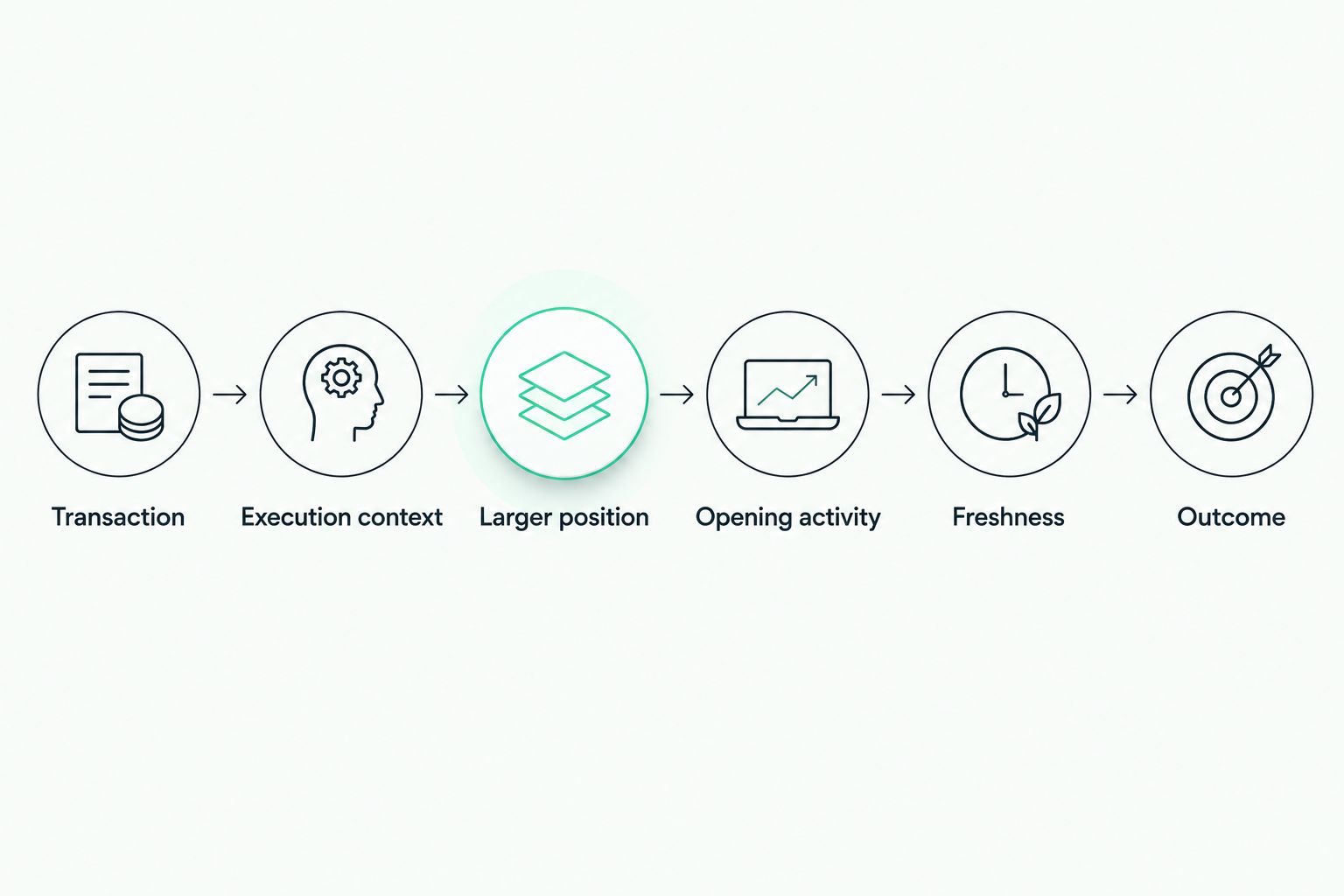
1. Separate the transaction from the interpretation
Options flow means the stream of reported options transactions. A scanner filters that stream into alerts, often using trade size, execution details, or activity in a particular contract.
An option gives its buyer a contractual right tied to an underlying asset, such as an exchange-traded fund. A call gives the right to buy; a put gives the right to sell. Neither label tells you the purpose of the entire position.
Start with the observable details:
- Underlying: Which security or index does the contract reference?
- Expiration: When does the contract expire?
- Strike: At what level does the contractual right apply?
- Size: How many contracts traded?
- Timestamp: When did the transaction occur?
- Execution context: What evidence supports the scanner’s directional label?
Hypothetical example: A scanner flags a large call transaction as bullish. The transaction is observable; the claim that its buyer expects an immediate rally is an interpretation. Keep those statements separate in your notes.
2. Check what the bid and ask actually establish
The bid is a quoted buying offer; the ask is a quoted selling offer. A transaction near the ask is commonly treated as evidence of buyer aggression, while a transaction near the bid is commonly treated as evidence of seller aggression.
That classification is not a complete strategy description. Quotes change, execution reports have timing differences, and a transaction can belong to a larger order.
Ask whether the scanner explains its classification method. Does it show the relevant execution context, or does it simply display a bullish badge?
Hypothetical example: A call trades near the ask. That supports a narrower statement about execution than “someone knows the market will rise.” Do not let an exciting label replace the narrower statement.
3. Look for evidence of a larger position
A spread combines options positions rather than relying on a single contract. One transaction can therefore be a leg, meaning one component, of a strategy whose overall exposure differs from the isolated alert.
Look for related transactions with matching timing, compatible sizes, and different strikes or expirations. Those details justify investigating a possible connection; they do not prove the trades belong together.
A standard equity or ETF option contract generally represents 100 shares, although adjusted contracts can differ. That convention does not apply to every index option: SPX options are cash-settled. Check the contract type before translating contract count into exposure.
Hypothetical example: A call purchase appears alongside a call sale at another strike. Reading only the purchase misses the possible spread. Reading both still requires evidence that the executions are connected.
4. Separate opening activity from closing activity
An opening transaction establishes or adds to a position. A closing transaction reduces or exits one. A scanner that cannot distinguish those purposes should not present them as established facts.
Volume counts contracts traded during a session. Open interest counts outstanding contracts and is generally updated daily rather than after every execution. Comparing the two provides context, not a live identification of who opened what.
A large transaction is not automatically new conviction. It can be an exit, a roll into another contract, or part of a position adjustment.
Reject a definitive opening claim when the supporting evidence only shows transaction size. Your 2026 checklist should record unresolved intent explicitly instead of filling the gap with a story.
5. Check freshness and expiration together
Compare the execution timestamp with the alert timestamp. Then check whether the underlying market has already moved away from the conditions described in the alert.
0DTE means zero days to expiration: the option expires that trading day. Its remaining life is short, so timing matters when interpreting an alert. A transaction can be accurately reported yet no longer describe the decision in front of you.
Ask what “real time” refers to. It could describe the incoming transaction feed, the delivery of an alert, or the refresh of an accompanying analysis. Those are different events.
Hypothetical example: An alert describes a call purchase before a sharp move in the underlying. You see it after the move. The original transaction remains real, but copying its apparent direction now is a different decision.
6. Check the explanation against the outcome
Save the original wording and timestamp before reviewing what happened next. Otherwise, a broad prediction can quietly become a precise success story after the fact.
Look for an invalidation condition: the observable development that would make the original interpretation wrong. “Bullish unless the market falls” is not useful. A meaningful explanation identifies what evidence supports the read and what would contradict it.
Review misses as well as successes. A public record is useful only when unsuccessful interpretations remain visible and the original wording stays intact.
For a 2026 evaluation, judge whether the service preserves its reasoning, not whether its latest screenshot looks impressive. An alert without a falsifiable explanation is activity reporting, not a complete trading thesis.
Which scanner approach gives you the clearest evidence?
Different presentations answer different questions. Compare their limits before choosing which one fits your learning needs.
| Approach | Best for | Useful evidence | Main limitation |
|---|---|---|---|
| Transaction feed | Checking what traded | Contract details, size, and timestamps | Leaves interpretation to you |
| Directional alerts | Finding activity to investigate | A filtered transaction and an explanatory label | The label can overstate what execution data establishes |
| Flow with gamma context | Comparing transactions with estimated market positioning | Activity alongside exposure estimates | Adds model assumptions rather than certainty |
| Timestamped interpretations | Auditing the reasoning behind a read | Original explanation, invalidation, and recorded outcomes | Requires consistent treatment of misses and successes |
Start with evidence you can inspect. A detailed feed demands more work from a beginner, but an unexplained directional label merely hides that work. An interpretation earns trust by showing its assumptions and its limits.
Do not confuse presentation with verification. A clean chart can make an uncertain inference look settled; a plain transaction record can be more useful when its supporting details are visible.
What does gamma context add to an options alert?
Gamma describes how quickly an option’s sensitivity to its underlying changes as the underlying moves. Gamma exposure, or GEX, estimates how options positions contribute to that changing sensitivity. It is an estimate of positioning-related exposure, not a direct forecast.
A gamma map organizes those estimates across price levels. A gamma flip is an estimated level where net gamma changes sign. A call wall is a level identified by a model as a concentration of call-related positioning or exposure; definitions depend on the provider.
These terms deserve plain-English explanations before they influence a decision. The inputs and assumptions behind a map matter as much as its labels.
Hypothetical example: A bullish-looking call alert appears near a call wall. The wall does not guarantee a rejection or a breakout. It gives you a level around which to examine the market’s actual behavior.
In a 2026 review, ask whether the gamma map and the flow alert describe compatible timestamps and the same underlying. Mixing an old exposure estimate with a fresh transaction creates context that looks current without necessarily being current.
Why does an options flow alert’s meaning vary?
The same broad alert label can hide materially different evidence. These factors explain why a scanner’s interpretation needs inspection:
- Execution timing: A transaction and the alert describing it are separate events. Check both timestamps.
- Position structure: An isolated option purchase can belong to a spread or a hedge rather than a standalone directional position.
- Position purpose: Opening and closing transactions have different meanings, even when their reported size looks similar.
- Expiration: A same-day option and a later-expiring option operate under different time constraints.
- Model assumptions: Gamma maps depend on how exposure is estimated and classified. A level is not an instruction to buy or sell.
Your response should match the uncertainty. When intent is unresolved, describe it as unresolved. You do not improve an alert by making its story more confident.
Does a large call alert prove someone is bullish?
A large call alert does not prove bullish intent. The transaction can be part of a spread, a hedge, or an exit, and the public print does not reveal the trader’s complete portfolio.
Treat size as a reason to investigate, not a reason to copy. The useful question is what the available evidence establishes about this transaction.
Can a correct alert still lead to a losing trade?
A correct transaction alert does not guarantee a profitable trade. Direction, timing, the terms of your entry, and changes in implied volatility—the market’s expectation of future movement reflected in option values—all affect the result.
An option can lose value despite a broadly correct directional view. That is why evaluating data accuracy and evaluating a trading decision are separate tasks.
How should a beginner evaluate a scanner before subscribing?
Use the same written checklist on both appealing and unappealing alerts. Record what traded, what the explanation inferred, what remained unknown, and what later contradicted the interpretation.
FlowMonkey provides live SPY, SPX, QQQ, and IWM gamma maps alongside real-time options flow alerts. Its combined view is relevant when you want to study activity and exposure together; the limitation remains that neither reveals another trader’s full intent.
Use a 7-day trial to evaluate whether the explanations help you understand the evidence. Prioritize plain-English reasoning and inspect how misses are shown publicly. Do not turn the trial into a contest to copy the largest trades.
Evaluate the read before trading
Use FlowMonkey’s 7-day trial to assess whether options flow and gamma maps make sense together.
FAQ
What should I check first in an options flow scanner?
Check the underlying, contract, execution timestamp, and evidence behind the directional label first. A real transaction does not establish the trader’s complete intent.
Does buying a call always mean a trader expects the market to rise?
Buying a call does not always mean a trader has a standalone bullish position. The purchase can belong to a spread, hedge, or adjustment that is not visible in the isolated alert.
Can open interest confirm that an alert opened a new position?
Open interest does not confirm the purpose of an individual live transaction. It is generally updated daily, so a volume comparison cannot identify every opening or closing trade as it happens.
What does 0DTE mean on an options scanner?
0DTE means zero days to expiration: the option expires that trading day. Check the execution and alert timestamps before treating the activity as current context.
Is a gamma flip a guaranteed reversal level?
A gamma flip is not a guaranteed reversal level. It is an estimated level where net gamma changes sign, and its usefulness depends on the model and the market’s actual behavior.
What should I look for during a FlowMonkey trial?
Use FlowMonkey’s 7-day trial to assess whether you understand the options flow alerts and gamma maps. Inspect the explanation, its assumptions, and the treatment of misses rather than expecting trading profits.
How can I tell whether a scanner’s performance claims are misleading?
Compare timestamped original explanations with a record that includes misses. Selected winning screenshots do not establish how consistently the scanner’s interpretations hold up.
One last thing
The most revealing alert is not necessarily the largest trade. It is the one that separates observed facts from interpretation and tells you what would prove the interpretation wrong.
Keep an “unknown” column in your notes. If the scanner cannot establish opening intent, position structure, or trader identity, leave those fields unresolved. That small habit stops a transaction report from becoming an invented story.